
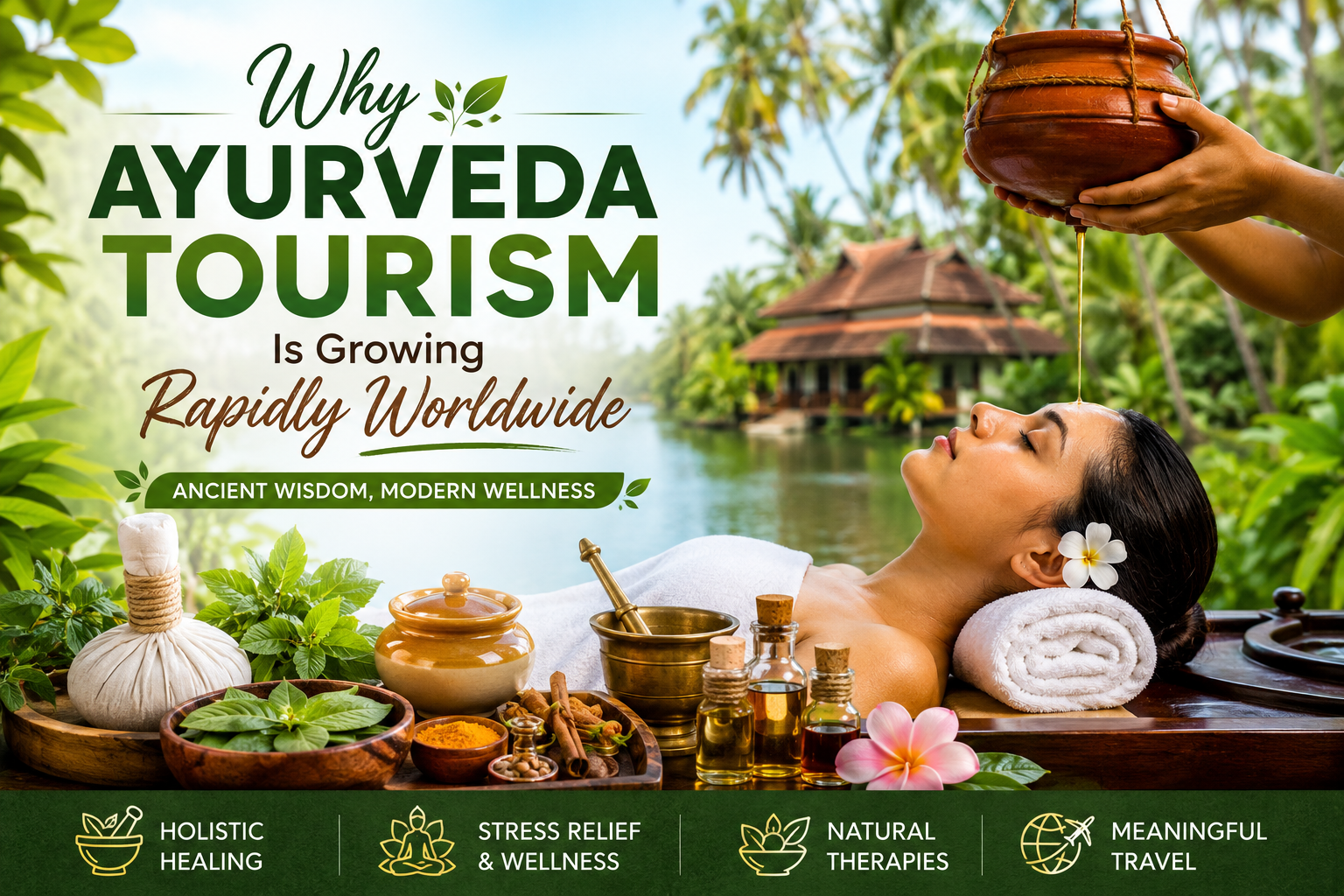

At present, Ayurveda tourism is one of the raging segments of the global
wellness travel industry. A traveler today expects more than just sightseeing
and a bit of luxury travel. The traveler desires better health, relaxation,
stress management, and a healthier lifestyle. Increased demand has brought
Ayurveda tourism into the limelight in the global context.
Ayurveda is the ancient Indian age-old system of
natural healing that attempts to balance the mind, body, and spirit. Many
people of today, on the other hand, have changed lifestyles, becoming extremely
stressful for them, hence invoking modern man as Ayurveda as a sort of remedy
for their physical and mental improvement.
What Is Ayurveda Tourism?
Ayurveda tourism includes travel experiences that revolve around healing
practices related to Ayurveda healing, wellness therapies, yoga, meditation and
detox programs, as well as healthy lifestyle choices. Many people travel to
wellness resorts, Ayurvedic retreats and holistic healing centres to experience
authentic wellness therapies or treatments with the goal of promoting health and
wellness through natural methods.
Ayurveda tourism combines ancient healing
practices with modern wellness travel. It allows individuals to relax while at
the same time improving their physical health naturally through herbal
treatments, massage, diet counselling and mindfulness activities.
Why Ayurveda Tourism Is Growing Worldwide
Rising Stress and Mental Health Concerns
Recent studies indicate that increasing stress levels across the globe are
one reason for the increased popularity of Ayurveda tourism. People are turning
to natural means of treating physical and emotional health issues due to their
busy work schedules, digital overloads, lack of healthy lifestyles, and/or
issues related to anxiety.
Ayurvedic wellness programs are designed to
reduce stress and improve sleeping habits while helping to restore emotional
balance. Due to this growing trend toward natural healing, many people now
prefer to participate in wellness retreats that include peaceful environments,
meditation, and tailored therapies.
Growing Interest in Natural Healing
Many individuals have become informed about adverse effects related with
long-term use of medication and chemical-based treatments; therefore there is a
significant worldwide trend toward using natural or holistic health care
methods.
Consumers are increasingly interested in
traditional healing methods, as used in Ayurveda, that focus on holistic
wellness instead of only providing relief from symptoms, i.e., herbal remedies,
natural oils/massages for therapeutic effects, detoxification strategies, and
healthy nutrition.
Popularity of Wellness Travel
The wellness travel market has seen rapid growth recently. Travellers
increasingly prefer healthy holidays to traditional tourist experience.
Ayurveda tourism meets this need since
travellers are now looking for something that combines relaxation, luxury, health
improvement and spirituality. Ayurvedic wellness resorts now provide customised
experiences for stress relief, detoxification, anti-aging, weight loss and
general rejuvenation.
India’s Role in Ayurveda Tourism
India has a long-standing tradition of Ayurveda dating back thousands of years, making it the world leader in Ayurveda tourism. Tourism related to Ayurveda has grown tremendously over the last couple of decades, and states such as Kerala, Karnataka, Goa, and Uttarakhand are now well-known for their Ayurvedic wellness resorts and traditional healing centers.
The state of Kerala, in particular, has earned an international reputation for its traditional use of Ayurveda as well as providing high-quality Ayurvedic treatments, herbal therapy, and resort-type locations in places of natural beauty. Numerous tourists from abroad visit India to access the qualified expertise of practitioners pertaining to certified Ayurveda, enjoy the benefits of yoga retreats, participate in the detoxification programs known as Panchakarma, and receive spiritual healing from various sources.
Although the Indian government has worked
diligently to promote Ayurveda abroad, it has also supported the medical and
wellness tourism sectors to help establish Ayurveda as a globally accepted form
of healthcare.
Benefits of Ayurveda Tourism
Complete Well-Being with Ayurveda
The Ayurvedic approach to health focuses on total wellness and not just
addressing isolated symptoms of illness. Ayurvedic treatments help travelers
enhance their overall physical health/fitness, gain greater mental
clarity/improve their capacity to concentrate on tasks, improve their emotional
balance, and significantly increase their energy levels.
Detoxification & Rejuvenation
Another aspect of many Ayurvedic programs is the use of Panchakarma therapy,
which aids in detoxifying the body through natural means. Detoxification and
rejuvenation are key elements of many Ayurvedic programs and therefore
attractive to many international travelers.
Enhanced Mental Wellness
Ayurvedic practices such as meditation, yoga, breathwork, and relaxation
techniques help travelers reduce anxiety and enhance emotional well-being.
Customized Wellness Programs
Ayurvedic practitioners assess each patient's unique characteristics (body
type, health conditions, etc.) and develop a unique treatment plan tailored to
provide optimal results. This continued personalization of each patient's
wellness experience increases both the overall effectiveness of the treatments
as well as the desire for such wellness opportunities by foreign tourists.
Luxury Resorts Are Boosting Ayurveda Tourism
The rapid rise of Ayurveda tourism has led luxe wellness resorts to shape
and influence the travelling experience of people who travel to understand and
experience Ayurveda. Over the last few decades, many luxury wellness resorts
have integrated into their operations, traditional Ayurvedic healing options
and provide guests with a high level of comfort and luxury through a variety of
accommodations, healthy and delicious organic meals, spa services and peaceful
natural settings (eg: a garden, mountain view, etc.).
The combined comfort and well being of these
two different tourism types has resulted in an incredible attraction to both
wellness tourists—who want to make a big change in their physical well being—as
well as luxury tourists—who want premium experiences that are focused on
improving their health and wellness.
Future of Ayurveda Tourism
The future of Ayurvedic tourism looks bright. There are more and more people
who want to travel for holistic health reasons, as awareness about holistic
wellness and wellness-related vacations continues to grow. Due to the growing
need for managing stress and improving mental health (and enhancing one's
immunity), as well as enabling for more natural forms of healing; it is
anticipated that Ayurvedic tourism will see an increase in development over the
coming years across the globe.
By using social media and tech to promote
their experiences, travel influencers, wellness bloggers, and other communal
travel and wellness resources will continue to be significant contributors to
expanding the exposure of Ayurvedic tourism to potential travellers globally.
Conclusion
Ayurveda tourism is quickly establishing itself within the global wellness
travel market. People globally wish to find natural remedies, relieve stress,
obtain emotional balance, and live a healthier lifestyle all through the use of
Ayurvedic treatments and wellness retreats.
Ayurveda tourism combines various aspects of
ancient healing methods, holistic wellness approaches, and creating relaxing
vacation experiences. This trend for Ayurveda tourism is likely to continue
growing at a rapid pace in the years to come. As Ayurveda tourism grows, it
will likely remain one of the most popular trends in global tourism due to the
increasing importance of wellness travel for modern-day travellers.