
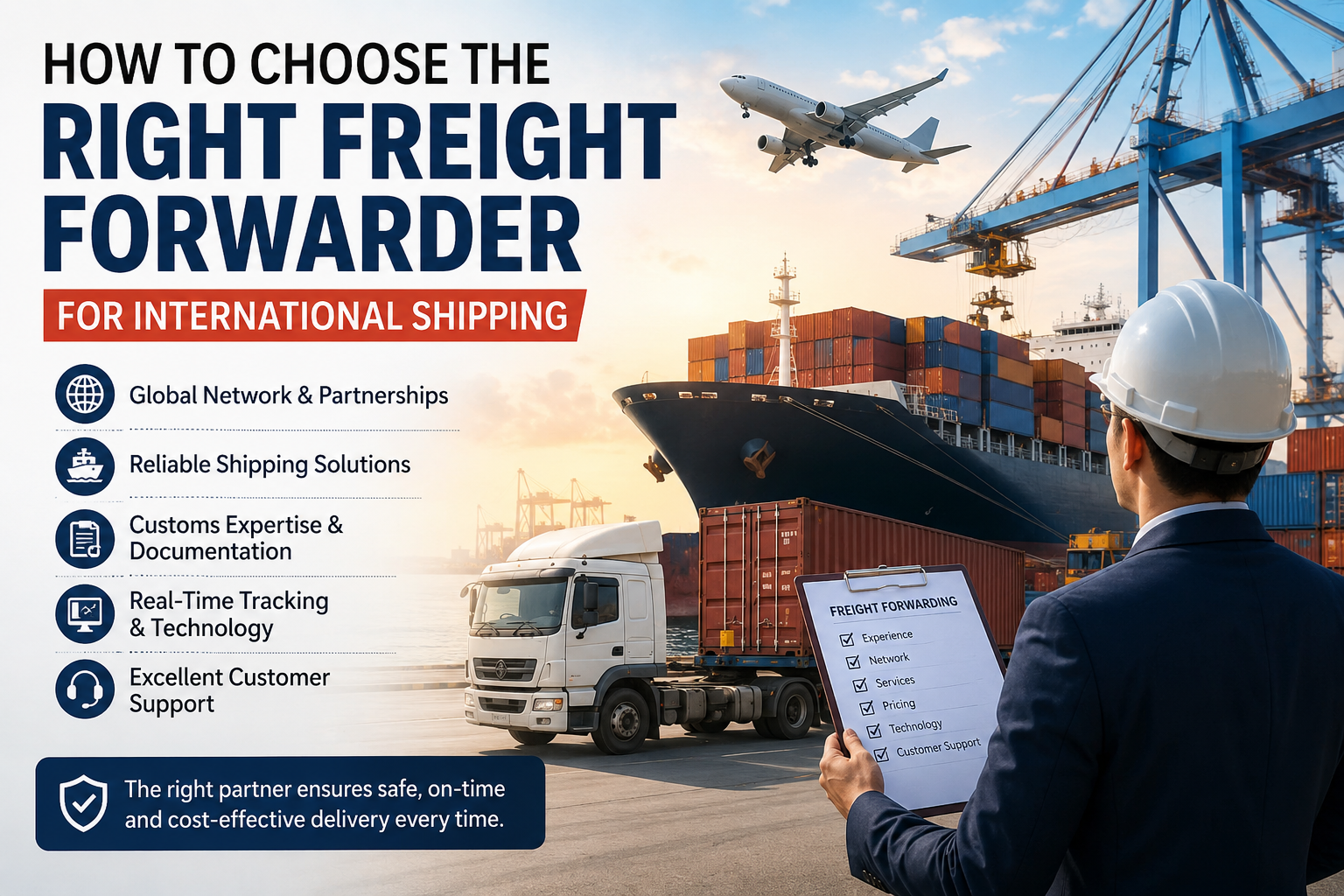

Whether you are a retailer importing products from another country or a corporation shipping all around the world, the quality of your forwarder can make or break your business supply chain. They can take care of logistics coordination, transportation, custom clearance, and paperwork; thereby, delivering your shipment on time.
Selecting the right freight forwarding service can be difficult as there are
numerous companies out there. Here are the crucial factors one needs to look
into when searching for a freight forwarding partner for shipping international
orders.
What Is a Freight Forwarder?
A freight forwarder is a third-party logistic provider responsible for organizing and controlling the movement of goods from a particular point to a final destination. Freight forwarders often coordinate a series of services between shippers and carriers. These services are often including air freight, sea freight, road carriage, custom formalities and storage.
Freight forwarders simplify the shipment processes in complicated
regulations of transport and minimize the transportation risks.
Evaluate Industry Experience
Experience is perhaps one of the most critical aspects when selecting a freight forwarder. An experienced freight forwarder will be aware of all relevant international shipping rules and regulations, customs procedures, and necessary documentation across the many countries they do business with.
Find a freight forwarder that has a proven track record of handling the type
of shipment that you will need to make. If you ship specific types of cargo
such as electronics, pharmaceuticals, heavy machinery, or perishable goods on a
regular basis, an industry specific freight forwarder will be more advantageous
to work with.
Verify Global Network and Partnerships
International shipping can mean various carriers, ports, customs, and transportation methods. A forwarder with a good worldwide network will manage these smoothly.
Inquire of freight forwarders about overseas agents, the carriers with whom
they work, and their global reach. This type of network means smoother
communication, greater shipment visibility and quick problem-solving when
obstacles arise.
Check Available Shipping Services
The shipping needs for different businesses will vary-some deliveries will need
air freight because of urgency, whereas others are better suited to affordable
sea freight solutions.
Look for a freight forwarder that provides additional services such as:
· Air
Freight
· Ocean
Freight
· Customs
Clearance
· Warehousing
and Distribution
· Cargo
Insurance
· Door-to-door
delivery
· Shipment
tracking
Having one logistics partner handling various services will streamline
operations.
Assess Customs Expertise
Customs clearance is typically one of the most complex parts of
international freight forwarding. There are numerous potential risks in this
area that can result in penalties and delays, if customs rules are not followed
and the necessary documentation is not produced correctly.
An experienced forwarder will be well versed in the rules governing importing
and exporting and systems of classification along with customs and duty
procedures.
Compare Pricing Transparently
Price should be considered too, however cheap does not always mean good
value. Certain freight forwarders might charge very little at the beginning,
then add up the costs toward the end of the shipment.
Make sure you have a complete quotation outlining:
· Freight
fees
· Fuel
surcharges
· Customs
fees
· Documentation
fees
· Storage
charges
· Delivery
fees
Evaluate Technology and Tracking Capabilities
Technology is critical in modern logistics operations. In real-time tracking
allows a shipment and its delivery to be monitored and its progress to be
easily visualized.
An effective freight forwarder should offer its clients access to on-line
systems for shipment management, and to automatically track shipment status
online.
Review Customer Service Quality
Good customer service is paramount in international logistics. Unexpected issues with weather, customs inspection, transportation problems, and delays can arise at any given moment.
Choose a forwarder that communicates well and gives good support. Customer comments, testimonials and case studies can offer a good insight into a business and its level of responsiveness.
A dependable logistics partner who provides updates promptly and accurately
throughout your shipment will remove much of the concern.
Consider Cargo Insurance Options
Although a thorough plan is implemented, it is still possible that shipments may sustain damage, be stolen or lost in transit while internationally transporting. This type of risk can be financially covered by purchasing cargo insurance.
Inquire with your freight forwarder about shipping insurance options, and
make sure that your shipments are insured for value and for risk involved in
their transportation.
Look for Long-Term Partnership Potential
Good freight forwarders do not just ship goods. Instead, they offer you strategic logistics support in your business growth.
A trustworthy logistics partner can optimize shipping routes, minimize the
transportation expenses and maximize the supply chain efficiency, and most
important, adjust to your business demands. Usually, working with freight
forwarders on the long term leads to good performance.
Final Thoughts
Selecting the correct freight forwarder to assist with international
shipping is a major decision, and its effects on the speed of delivery, cost of
shipment, and customer satisfaction and success can last for years.
Evaluating freight forwarders on factors such as experience, global
networks, services, customs proficiency, cost visibility, technology, and
customer service, businesses can be sure to select a logistics partner that has
the solutions for their unique international shipping needs.
By spending adequate time selecting the right freight forwarder now,
businesses will benefit from an efficient and reliable shipping network and
strategy far into the future.