
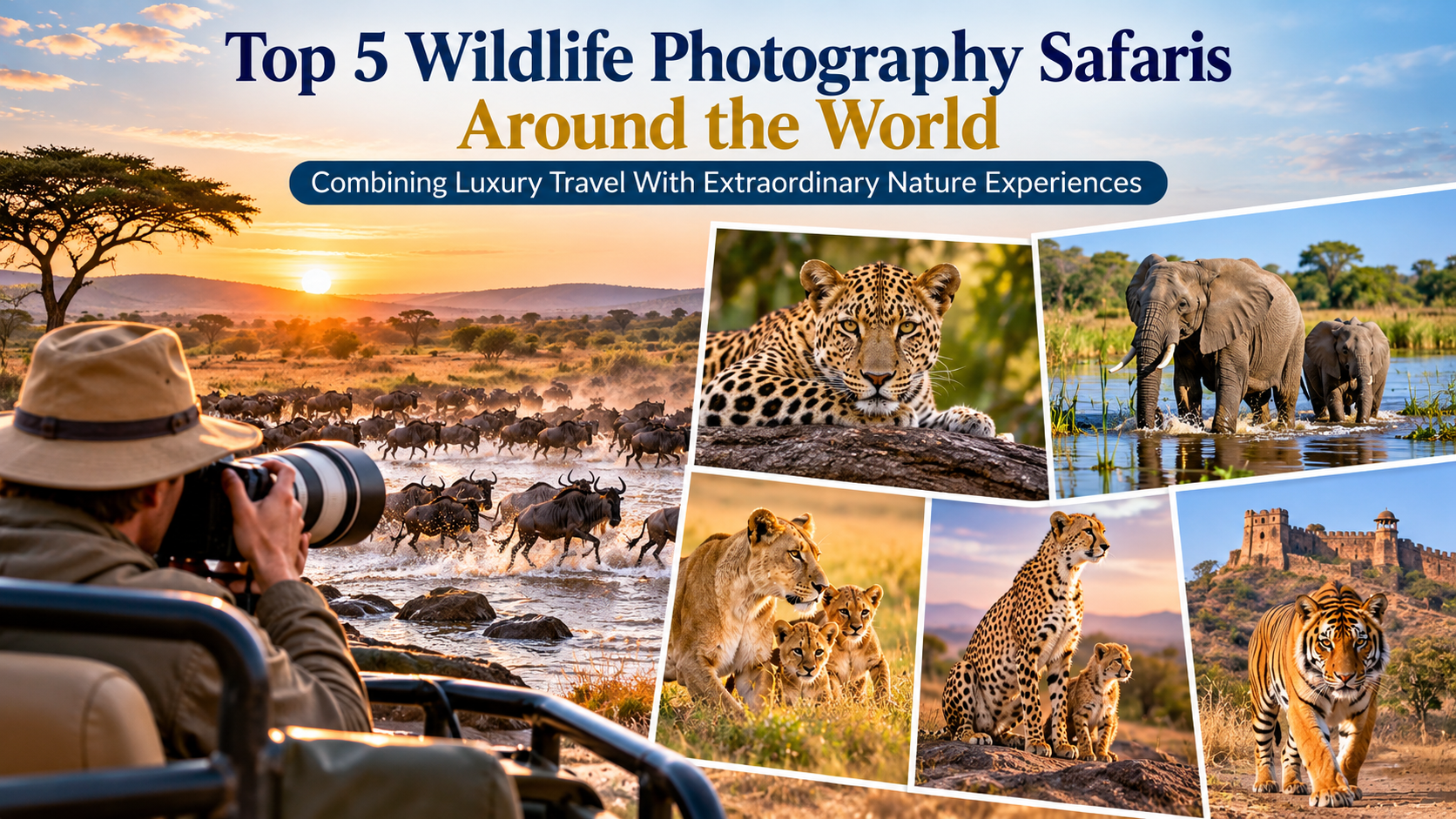

Top 5 Wildlife Photography Safaris Around the World: Combining Luxury Travel With Extraordinary Nature Experiences
A great wildlife photograph usually depends on patience, good light and a guide who knows where the leopard slept last night. Luxury camps make that patience easier to enjoy. You wake before dawn to coffee on the deck, spend the golden hours in the vehicle, and come back to a hot shower and a proper dinner. That balance is why wildlife photography safaris have moved from a niche hobby to one of the most requested forms of high-end travel. This guide covers five wildlife photography safaris that deliver strong images and real comfort, from the plains of Kenya to the forests of Rajasthan.
How We Chose These Safaris
Each destination was picked for how reliably animals show up and for how well the lodges handle a photographer’s schedule. Private concessions count for a lot. They often allow off-road driving and night drives, which most national parks do not. Small camps with six to twelve tents also keep vehicle numbers low, so you are not sharing a sighting with fifteen other cars. Those details separate an ordinary wildlife photography safari from a memorable one.
The 5 Best Wildlife Photography Safaris
1. Masai Mara, Kenya
Between July and October, the Mara River crossings put wildebeest and zebra in front of waiting crocodiles and your lens in the front row. Book a stay in a conservancy such as Naboisho or Mara North, where night drives and walking safaris are permitted. Camps like Angama Mara sit high on the Oloololo Escarpment, with views across the plains. A 100-400mm lens and a shutter speed near 1/2000 handle most crossings. For first-timers, this is one of the most dependable wildlife photography safaris in Africa.
2. Serengeti, Tanzania
Come between late January and March for newborn wildebeest calves in the southern Ndutu area, and for the lions, cheetahs and hyenas that follow them. The action is fast and close. Mobile tented camps shift with the herds, so you sleep near the sightings instead of driving two hours to reach them. Dawn matters here. Many lion hunts happen in the first light, which is why Serengeti wildlife photography safaris start so early.
3. Okavango Delta, Botswana
Floodwater from the Angolan highlands peaks between June and August and turns the delta into a maze of channels. Shoot from a mokoro, a traditional dugout canoe, and you sit at water level with elephants wading past and reed frogs on lily pads. Private concessions such as Chitabe and Duba Plains permit off-road driving, and Duba Plains is known for buffalo and lion standoffs. A wildlife photography safari here costs more than most. The small visitor numbers explain why.
4. Sabi Sand, South Africa
For leopards, few places compete with the Sabi Sand Game Reserve, which shares an unfenced border with Kruger. Open vehicles and the freedom to leave the track let you reposition for better light. Lodges like Londolozi and Singita Boulders have followed leopard families across generations, so the cats tolerate vehicles calmly. Go between May and September, when the bush thins out. A 200-600mm lens covers nearly every situation, and this is the luxury wildlife photography safari with the best leopard odds.
5. Ranthambore, India
Few images are as striking as a tiger walking past the ruins of a 10th-century fort. Ranthambore National Park in Rajasthan is open from October to June, and the hot months of April to June are best because tigers come to the lakes to cool off. Permits for zones 1 to 5 sell out early, so book ahead. Stay at a tented camp such as Aman-i-Khás. Game drives run in two fixed slots each day, which makes Ranthambore wildlife photography safaris very different from the open-ended schedule in Africa.
Why Travelers Choose Luxury Wildlife Photography Safaris
- Small camps and private concessions keep crowds away from sightings.
- Guides position the vehicle for light and background, not only for the animal.
- Many lodges offer charging stations, lens cleaning and camera gear rental.
- Photographer-specific vehicles give each guest a clear window seat.
Common Uses
Most guests book a wildlife photography safari to build a portfolio, mark an anniversary or travel with a small group of photographers who share the cost of a private vehicle. Some come back to the same camp every year to follow one leopard family.
Planning Your Wildlife Photography Safari
- Pick the season based on the species you want to photograph.
- Choose a private concession or conservancy over a public park.
- Match your lens to the destination: 100-400mm for Kenya, 200-600mm for Sabi Sand.
- Check permits, vaccination requirements and charter flight weights.
Gear Care on a Wildlife Photography Safari
Dust is the biggest enemy on a dry-season drive. Keep a lens cloth and a blower in your daypack, pack silica gel in the camera bag, and back up memory cards every night on a portable drive. Never keep all cards in one bag.
Quick Trip Specifications
| Safari | Best Months | Star Subjects | Camp Style |
|---|---|---|---|
| Masai Mara | Jul–Oct | Wildebeest crossings, lions | Conservancy lodge |
| Serengeti | Jan–Mar | Calving, cheetahs | Mobile tented camp |
| Okavango Delta | Jun–Aug | Elephants, wild dogs | Water-based camp |
| Sabi Sand | May–Sep | Leopards | Luxury lodge |
| Ranthambore | Oct–Jun | Tigers | Tented camp |
Booking and Logistics
Most of these camps have fewer than a dozen tents, and migration-season dates fill nearly a year ahead. Book your wildlife photography safari at least nine to twelve months out for the Mara and the Serengeti. Within Africa, small charter flights link camps and carry baggage limits of around 15 kg in soft bags, so keep your camera gear in a small carry-on. Plan one extra night at each end to absorb delays. A well-planned trip leaves room for the unexpected.
Request a Quote
Ready to plan your own wildlife photography safari? Share your travel dates, preferred destination and camera setup, and we will shape a route that fits your budget and your shot list.
Ready to Plan Your Wildlife Photography Safari?
Let Denay Travel Logistics help you organise an extraordinary wildlife adventure.
Contact Denay Travel Logistics Today →