
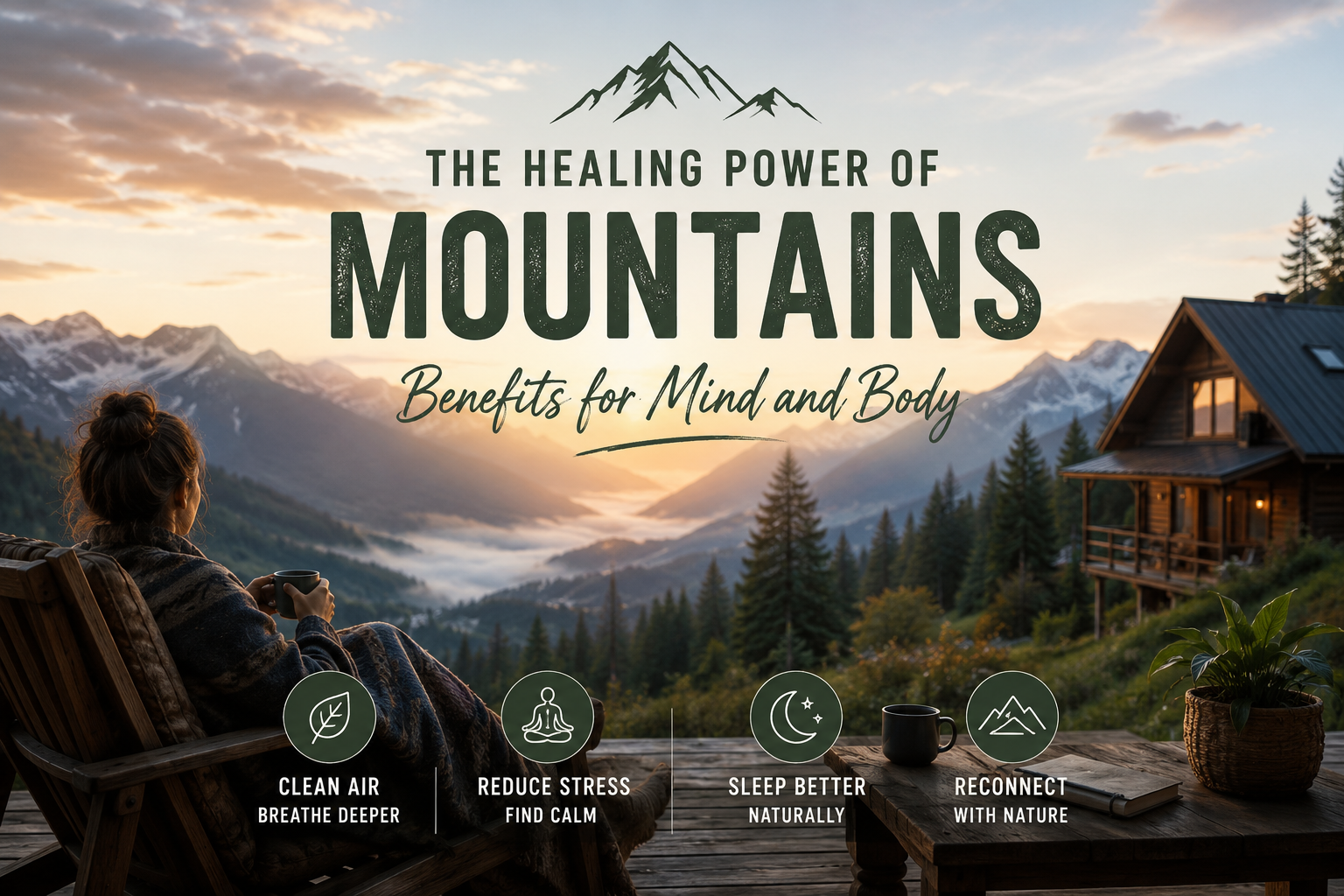

Something shifted in the last few years. People who once booked beach holidays without a second thought are now searching for cabins tucked into pine forests, lodges perched above the clouds, and wellness centers built into hillsides. Mountain retreats have quietly become one of the fastest-growing choices for travelers who want more than a tan and a cocktail with an umbrella in it. They want to feel genuinely better when they come home.
So what's driving this? A mix of science, instinct, and plain old exhaustion
with city life.
The Air Really Does Make a Difference
Altitude changes the way your lungs and blood work, and not in a subtle way. With increased altitude comes a reduced amount of oxygen per breath, your body needs to create red blood cells over time. Athletes have used this trick for decades, training in the mountains before big competitions because it boosts endurance once they return to sea level.
You don't need to be training for the Olympics to benefit. Even a few days
at moderate altitude can leave people feeling more alert, sleeping more
soundly, and breathing easier once their body adjusts. Factor is mountain air
is low in common respiratory triggers like pollutants, allergens, and car
fumes. Small wonder doctors have recommended mountain air to asthma sufferers
long before there was a buzzword for "wellness tourism."
Silence Is Becoming a Luxury
Anyone who has lived in a city will tell you there are dozens of things they love, but few can compare to the peaceful moments of solitude they miss. Constant noise, from traffic to notifications to the low hum of other people's lives pressing against your own, keeps the nervous system on low-grade alert all day. Researchers studying stress hormones have found that background noise, even at levels most people barely register consciously, can keep cortisol elevated for hours.
Mountains strip that away almost entirely. Wind through trees, a stream
somewhere below, maybe the occasional bird. That's it. Guests at mountain
lodges frequently report that the first night's sleep is rough simply because
their bodies aren't used to that much silence, and by the third or fourth night
they're sleeping deeper than they have in months.
Movement Happens Without Trying
Gyms are useful, but there's a reason a hike up a ridge feels different from thirty minutes on a treadmill. Uneven terrain engages stabilizer muscles that flat pavement never touches. Elevation gain works the cardiovascular system harder than distance alone would suggest. And because the scenery keeps changing, people tend to walk farther without noticing how tired they are.
This matters for a simple reason: exercise that doesn't feel like exercise
is exercise people actually keep doing. A retreat built around trails,
switchbacks, and lookout points turns physical activity into something closer
to exploration, which is a much easier habit to sustain than forcing yourself
through a workout app.
The Digital Disconnect Nobody Expected to Love
Cell signal drops out fast once you climb past a certain elevation, and most people arrive at a mountain retreat mildly annoyed about it. By day two, that annoyance usually flips into relief. Without a phone buzzing every few minutes, attention naturally settles onto slower things: a conversation that runs long, a book finished in one sitting, actually tasting a meal instead of scrolling through one.
Sleep researchers point to this as one of the more measurable benefits. Blue
light exposure in the evening suppresses melatonin production, and mountain
retreats, whether by design or simple geography, tend to strip that exposure
away. Guests often describe falling asleep faster and waking up without an
alarm for the first time in years.
Community Without the Performance
There's also a social piece that gets overlooked. Group hikes, shared meals at long wooden tables, evening fires where people actually talk instead of checking their phones between sentences. Mountain retreats tend to strip away the performative side of socializing that dominates city life, where meeting up often means picking the right restaurant and posting about it afterward.
Loneliness has been called a public health concern by researchers for years
now, and the antidote isn't complicated. It's proximity, shared activity, and
time without an agenda. Mountains happen to be an unusually good setting for
all three.
What This Means If You're Considering One
You don't need three weeks or a five-star budget to feel a difference. Even a long weekend at a modest elevation, away from screens and traffic, gives the body enough time to lower stress hormones and reset sleep patterns. Pack layers, because mountain weather shifts fast. Give yourself a day to adjust if you're gaining significant altitude. And resist the urge to overplan every hour.
The appeal of mountain retreats isn't really about escaping life. It's about
remembering what your body feels like when it isn't constantly reacting to
noise, screens, and stale air. For a growing number of people, that turns out
to be reason enough to book the trip.