
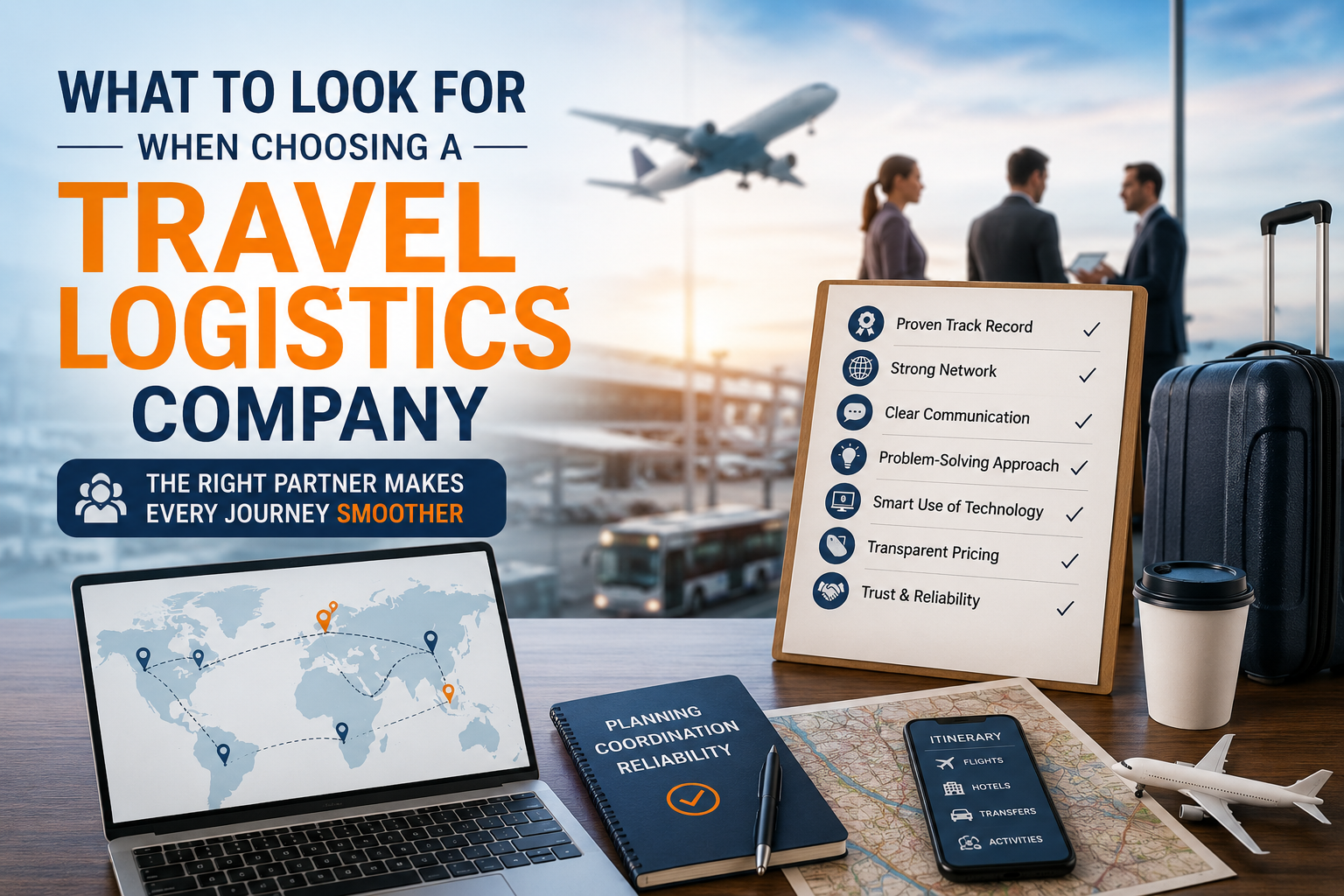

If you've ever tried to coordinate travel for a large group — a corporate retreat, a sports team, a wedding party scattered across three cities — you already know it's not as simple as booking a few flights and calling it done. Someone has to juggle transfers, hotel check-in times, last-minute flight changes, visa paperwork, and the inevitable phone call at 11 p.m. because a bus didn't show up. That "someone" is usually a travel logistics company, and picking the wrong one can turn a trip into a headache nobody signed up for.
So how do
you actually choose one? Here's what matters, based on what tends to separate
the companies that keep their promises from the ones that just sound good in a
sales pitch.
Start With Their Track Record, Not Their Website
Any company can put together a polished homepage with stock photos of smiling travelers. What you want to know is who they've actually worked with and for how long. Ask for references from clients in your industry, or at least clients with similar needs — a company that's great at booking honeymoon packages isn't automatically great at moving 200 conference attendees across four connecting flights. Don't be shy about asking pointed questions:
How did they handle a cancelled flight last month?
What happened the last time weather grounded a whole itinerary?
The answers tell you more than any brochure will.
Look at Their Network, Not Just Their Prices
A lot of
people shop for travel logistics the way they shop for a toaster — lowest price
wins. That's a mistake. What you're really paying for is access: relationships
with airlines, hotel chains, ground transport providers, and local fixers in
the cities you're actually going to. A company with a thin network might quote
you a great rate and then scramble when something goes wrong, because they
don't have the connections to fix it quickly. Ask who they partner with in your
destination cities and how long those relationships have been in place.
Communication Style Matters More Than People
Realize
This one gets overlooked constantly. Before you sign anything, pay attention to how the company communicates during the sales process itself.
Do they respond quickly?
Do they explain things clearly, or bury you in jargon? Is there one point of contact, or will you be bounced between three different departments every time you have a question?
If getting a straight answer feels like pulling teeth
before you're even a paying customer, that pattern rarely improves afterward.
Ask About Their Problem-Solving, Not Just Their
Planning
Anyone
can build a beautiful itinerary when everything goes right. The real test is
what happens when it doesn't — a delayed flight, an overbooked hotel, a driver
who's stuck in traffic. Good travel logistics companies have contingency plans
baked in, and they'll usually be upfront about how those work. If a company
can't clearly explain what happens when plan A falls apart, that's worth
noting.
Check Their Technology, But Don't Get Dazzled By It
A lot of
companies now offer apps or dashboards for tracking itineraries, expenses, and
real-time updates. That's genuinely useful, especially for group travel or
business trips where multiple people need visibility into the same plan. But
technology should support good service, not replace it. If a slick app is the
main thing being sold to you, ask what happens when something needs a human
decision — because eventually, something will.
Understand the Fine Print on Costs
Hidden
fees are the quiet dealbreaker in this industry. Ask directly what's included
in quoted prices and what counts as an "extra" — service charges,
cancellation policies, currency conversion fees, and last-minute rebooking
costs can all sneak up on you. A trustworthy company will walk you through this
without you having to dig for it.
Trust Your Gut a Little
After all the research and reference-checking, there's still a human element to this decision. If there's a 'feeling off' during initial discussions – evasive answers, hard sales tactics or too 'smooth' promises – chances are your gut feeling is correct. Travel arrangements is a relationship, not a single purchase especially if you’ll use the same company for several future trips.
Picking
the best partner wont ensure the whole trip will go perfectly every time –
thats not usually how travel goes. But if things do go wrong, you will be
dealing with people in your corner who can fix things quickly rather than some
sort of company which vanishes into thin air the instant complications are
encountered.
At the end of the day, the right travel logistics partner should feel less like a vendor and more like a team you can rely on when things get complicated. If you're tired of chasing down updates or dealing with companies that disappear the moment a problem pops up, we'd love the chance to show you a better way. Get in touch with us today, and let's talk about what your next group trip actually needs.