
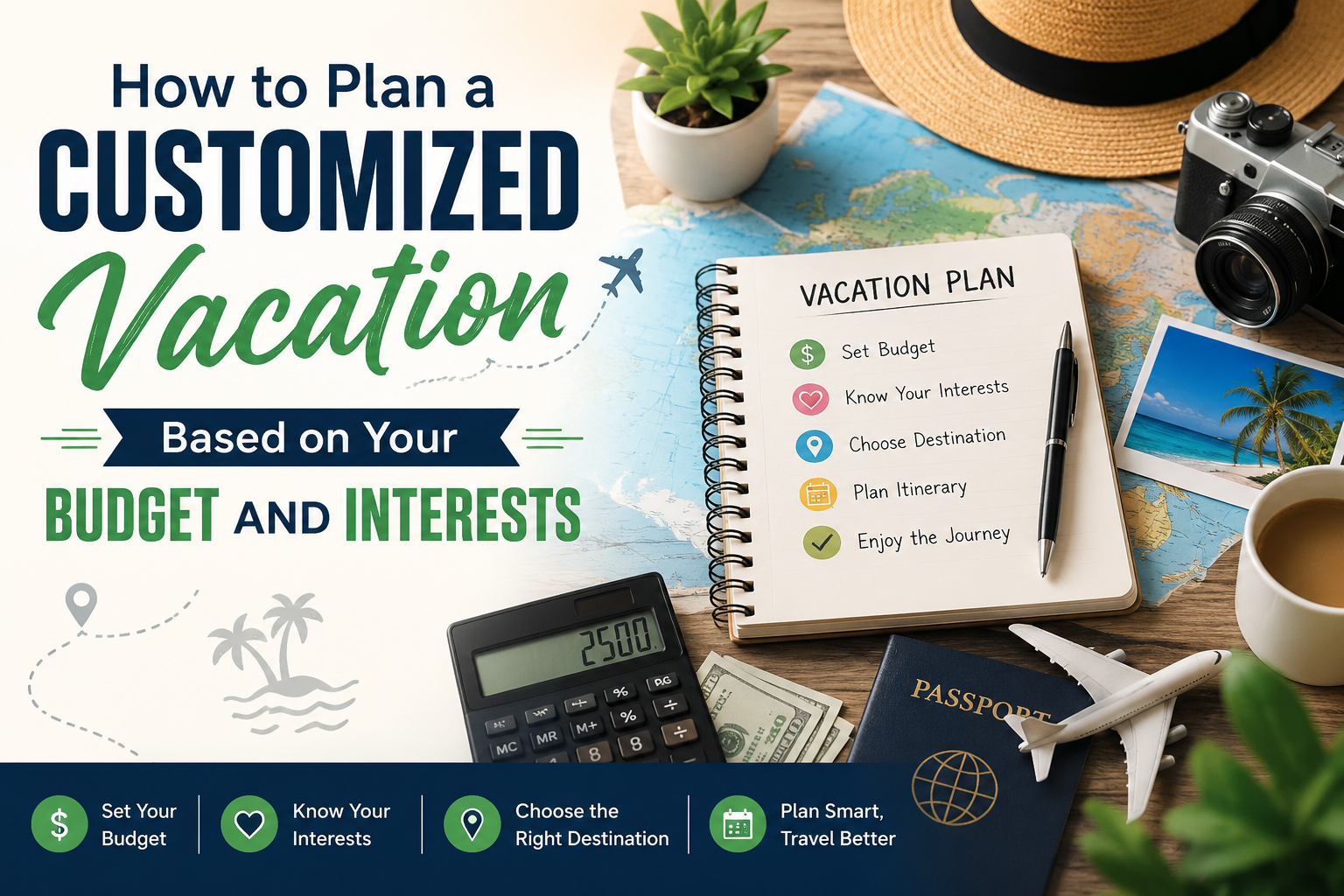

How to Plan a Customized Vacation Based on Your Budget and Interests
Most people don't fail at vacation planning because they lack options. They fail because they try to copy someone else's trip. You've seen the travel blogs — the same ten cities, the same "must-see" list, the same itinerary that looks great on Instagram but leaves you exhausted and broke. A customized vacation works differently. It starts with you: what you can actually spend, what you actually enjoy, and how much downtime you actually need. Get those three things right, and the rest of the planning falls into place on its own.
Start With Your Real Budget, Not a Guess
Before you open a single travel site, sit down and figure out what you can genuinely afford. Not what you'd like to spend — what you can spend without stressing about your credit card statement in September.
Break it into four buckets: transportation, lodging, food, and activities. A common mistake is booking flights and hotels first, then realizing there's nothing left for the things you actually wanted to do. Flip that order. Decide how much you want to spend on experiences first, then work backward to see what kind of transportation and lodging fits around it.
If your budget is tight, that doesn't mean your trip has to feel cheap. It means your customized vacation needs smarter choices — shoulder-season travel, one splurge instead of five small ones, or a destination where your currency stretches further. A well-planned mid-range trip almost always beats an overstretched luxury one, because you're not spending the whole time worrying about money.
Get Honest About Your Interests
This is the part people rush through, and it's the part that matters most. Write down what you actually want from this trip — not what you think a "good traveler" should want. Do you want to hike for six hours a day, or do you want to sit at a café and watch people go by? Do you want a packed itinerary, or three solid experiences and a lot of unstructured time?
Group your interests into categories: food, nature, history, nightlife, relaxation, adventure. Most people land on two or three that matter far more than the rest. Once you know yours, you can build the entire trip around them instead of trying to squeeze in a little of everything and doing none of it well.
This is also where a customized vacation beats a packaged tour. A tour group has to please fifty different people. You only have to please yourself, or the handful of people traveling with you.
Pick a Destination That Matches Both
Now put the budget and the interests side by side. A destination only works if it satisfies both columns. A food-focused trip to a city with an expensive dining scene might blow your budget in three days. A nature-heavy trip to a remote region might cost more in transportation than you expected, even if lodging is cheap.
Look for places where your top interest is genuinely affordable, not just theoretically doable. Southeast Asia, parts of Eastern Europe, and Central America consistently offer strong value for food, culture, and outdoor activities. If your interest is luxury relaxation, look at destinations where that specific experience is priced lower than in obvious hotspots — a private villa in a lesser-known coastal town instead of a five-star resort in a major city.
Build the Itinerary Around Priorities, Not a Checklist
Once you've settled on a place, resist the urge to fill every hour. A rushed itinerary is one of the fastest ways to turn a well-planned customized vacation into a tiring obligation. Pick your top three experiences for the trip and build everything else loosely around them.
Leave gaps. Real gaps, not fifteen-minute buffers between attractions. Some of the best travel memories happen in unplanned moments — a conversation with a shop owner, a wrong turn that leads to a great meal, an extra hour at a viewpoint because the light was good. If your schedule has no room for that, you're not planning a vacation. You're planning a schedule.
Where to Actually Save Money
Not every dollar you save is worth the trade-off. Here's where cutting costs usually pays off, and where it usually backfires:
- Worth cutting: hotel breakfast (local cafés are usually better and cheaper), guided tours for sights you can see independently, and pricier accommodation in exchange for a great location.
- Not worth cutting: travel insurance, a decent night's sleep before a long travel day, and the one experience you traveled specifically to have.
A customized vacation isn't about spending less everywhere. It's about spending well on the things that matter to you and cutting the things that don't.
Build In a Buffer
Whatever budget you land on, add 10 to 15 percent on top for the unexpected — a delayed flight, a closed attraction that means an extra taxi ride, a meal that runs longer than planned because the conversation was good. Trips without a buffer tend to end with either stress or a missed experience because the money ran out at the wrong moment.
Bringing It All Together
A customized vacation isn't about finding the "best" destination on some generic list. It's about matching a place, a pace, and a price point to the person actually taking the trip. When your budget and your interests are both driving the decisions, the planning gets easier, not harder, because you're no longer trying to fit yourself into someone else's version of a good trip.
Start with the numbers. Get honest about what you want. Pick a place that can deliver both. Everything after that is just details — and details are a lot easier to sort out once the foundation is right.
If you want to plan a vacation based on your budget and interests, let the experts at Denay Travel Logistics create a personalized itinerary for you. If you’re interested in planning your next memorable trip, please reach out to our team today.