

If you've
planned an event any time in the last few years, you already know the rules
keep shifting. Guests expect more, budgets stretch less, and everyone's
comparing your event to the last "wow" thing they saw on their phone.
So let's talk about what actually works in 2026, without the fluff.
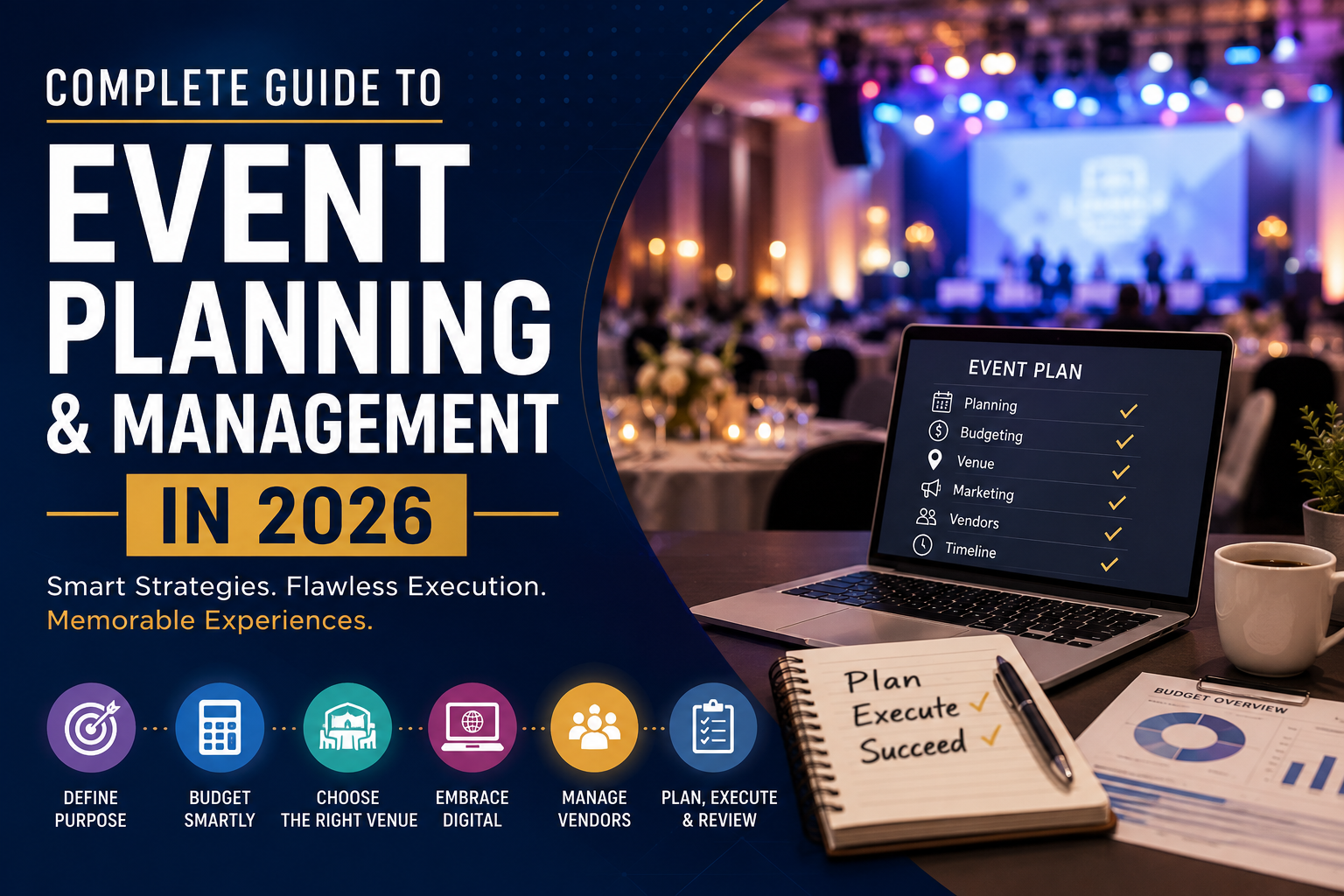
Figure Out Why You're Doing This First
Before you touch a venue calendar or fire off invites, sit with one question: why does this event need to exist? Is it about closing deals, celebrating something real, raising money, or just bringing people together? It feels like a formality, but skipping it is honestly the biggest reason events end up feeling all over the place.
Once you
know your "why," every other decision gets easier. Stuck between two
catering options? Go back to the goal. Not sure if you need a photo booth or a
keynote speaker? Same answer — check it against the reason you're throwing this
thing in the first place.
Let's Talk Money (Because It Always Comes Down to
Money)
Nobody
loves budgeting, but a vague number in your head isn't a budget — it's a guess.
Here's roughly how the money tends to break down for events that go well:
Venue and food usually eat up close to half your budget, somewhere around 40-50%. Entertainment or the actual program takes another 15-20%. Marketing gets 10-15%, staffing and logistics take about 10%, and then — this part really matters — keep the rest, maybe 10%, just sitting there as a cushion.
That
cushion isn't optional. Something will cost more than you planned. Always.
Could be an extra hour with the AV crew, could be last-minute printing, could
be that one vendor who "forgot" to mention a delivery fee. Planners
who skip the cushion end up scrambling or paying out of pocket, and neither is
fun.
Picking a Venue Is About More Than Just Looks
Sure, a gorgeous space matters, but ask yourself some less glamorous questions too. Can the layout actually flex if your event has multiple parts to it? Is the Wi-Fi reliable enough to handle a livestream if you're doing one? Is there proper wheelchair access, clear signage, all of that — because guests notice when it's missing, and honestly, they should.
And don't
skip the walkthrough. Photos online can be deceiving. If you can't visit in
person, at least ask for a live video tour before you sign anything.
Yes, You Probably Need a Digital Layer Too
Even a fully in-person event benefits from some kind of online presence now — a livestream option for people who can't make it, an event app, or just a hashtag people can rally around. Guests kind of expect to interact with your event digitally whether they're standing in the room or scrolling from home.
The
mistake a lot of planners make is treating this as an afterthought, something
to slap together the week before. It shows. Build it into your plan from the
start and it'll actually feel intentional instead of tacked on.
Keeping Vendors From Stepping on Each Other
Juggling caterers, photographers, decorators, and sound techs gets chaotic fast if there's no shared system. Even something as basic as one spreadsheet everyone can see — with time slots and who's responsible for what — saves you from the classic disasters: two vendors trying to set up in the same corner, or food showing up before the tables are even ready.
One habit
that's saved me more than once: confirm with every vendor a week out, then
again 48 hours before. It takes ten minutes and it catches problems before they
become your problem.
Work Backward From the Big Day
A
timeline that actually holds up starts at the event date and counts backward
from there. Roughly 8-12 weeks out, you want your venue locked and key vendors
confirmed. Around 4-6 weeks out is when marketing should really pick up and
your run-of-show starts taking shape. A couple weeks before, nail down your
final headcount and brief your team. Two days out, do your last walkthrough and
make sure deliveries are on track. And on the day itself — just show up early,
brief everyone, and accept that you'll be problem-solving on the fly no matter
how well you planned.
Don't Forget to Check How It Actually Went
Once the event wraps, resist the urge to just collapse and move on. Send a short survey within a day while it's still fresh in people's minds — response rates drop fast after that window closes.
And grab
your team for a quick debrief while everyone remembers the details. What
worked, what didn't, what you'd never do again. This one habit is honestly what
separates planners who keep improving from ones who make the same mistakes
every single time.
The Bottom Line
At the
end of the day, great events in 2026 still come down to the basics — knowing
your purpose, budgeting honestly, and sweating the logistics. Layer in the
digital expectations guests bring with them now, stay flexible, and check in
often. Do that, and your event will look effortless on the outside, even if you
know exactly how much work went on behind the curtain.